Take Our Online Hearing Test
Check Your Hearing Today
Test your hearing from the comfort of your home. Our online hearing test is free, quick and easy. Fun fact: Our online hearing quiz was voted Top 5 Online Hearing Test by CNET. The content of this quiz is not intended to replace or substitute any hearing healthcare that you may need. This quiz, hearing test and the related web pages are for educational purposes only and are not intended to treat, diagnose, cure or prevent any disease. To determine the hearing healthcare products and services that best meet your needs, consult a licensed professional. By entering your email address, you agree to receive hearing-related content from Amplifon Hearing Health Care. You may opt out of email communication at any time.Hearing Health Next Steps: What to Expect
Hearing health and medical history
Ear inspection
Pure-tone testing
We also have created a NEW Pure Tone Hearing Test for free on our website. Check it out.
Speech testing
Post-testing consultation
How Our Online Hearing Test Works
Taking our hearing test is free, easy, and straightforward. From start to finish, taking this quiz should take 5-8 minutes. Here’s what to do:
- Grab your headphones and find a quiet environment. If you’re looking for an online hearing test without headphones, you can still take our quiz. But try to find a quiet place so you’re able to focus.
- You’ll listen to conversations in everyday places and environments.
- After each scene, we’ll ask you about the conversation you just heard. Select your response from the options provided.
- You’ll get an instant overview of your hearing performance.
Frequently Asked Questions
Taking the Hearing Test
Do I need special equipment?
Can I take the test without a quiet environment?
Is the test available in other languages?
What happens after the test?
If you are looking for a more indepth test of your hearing, check our our new Pure Tone Hearing Test. It's online and it's free.
Is the test accurate?
I have tinnitus. Can I still complete the test?
Technology & Accessibility
What if Bluetooth doesn't recognize my headphones?
- Can’t find your headphones? Ensure they’re in pairing mode and within range (usually 10 meters/33 feet).
- Connection failed? Turn off Bluetooth on your device and headphones, then try again.
- Still not working? Reset your headphones by following the manufacturer’s instructions.
Should I turn off any audio settings for the test?
Yes, it’s a good idea to turn off audio effects and certain accessibility settings during a hearing test. These settings can alter the sound and affect the accuracy of the test. Here’s what to disable:
- Equalizer (EQ). Go to your device’s audio settings or music app to turn it off.
- Noise Cancellation or Reduction. Turn this off in your headphones or device’s settings.
- Surround Sound or Spatial Audio. Disable this feature in your audio or sound settings.
- Bass Boost or Treble Enhancements. Turn this off in your audio or sound settings.
- Hearing Accessibility Settings.
For IOS, go to Settings > Accessibility > Audio/Visual and reset balance or disable mono audio.
For Android, check Settings > Accessibility > Hearing for similar options.
Data Privacy & Security
Is my data safe? Which data is stored?
Hearing Health Next Steps: What to Expect
Based on your hearing test results, you may need to schedule a professional exam.
Here’s what to expect from your hearing appointment.
Most hearing healthcare professionals use protocols and technologies to determine the extent of your hearing loss. The following are standard elements of the adult hearing test appointment:
- Hearing health and medical history. You’ll supply information, in writing and/or verbally, about your hearing difficulties, along with details about your medical history and lifestyle.
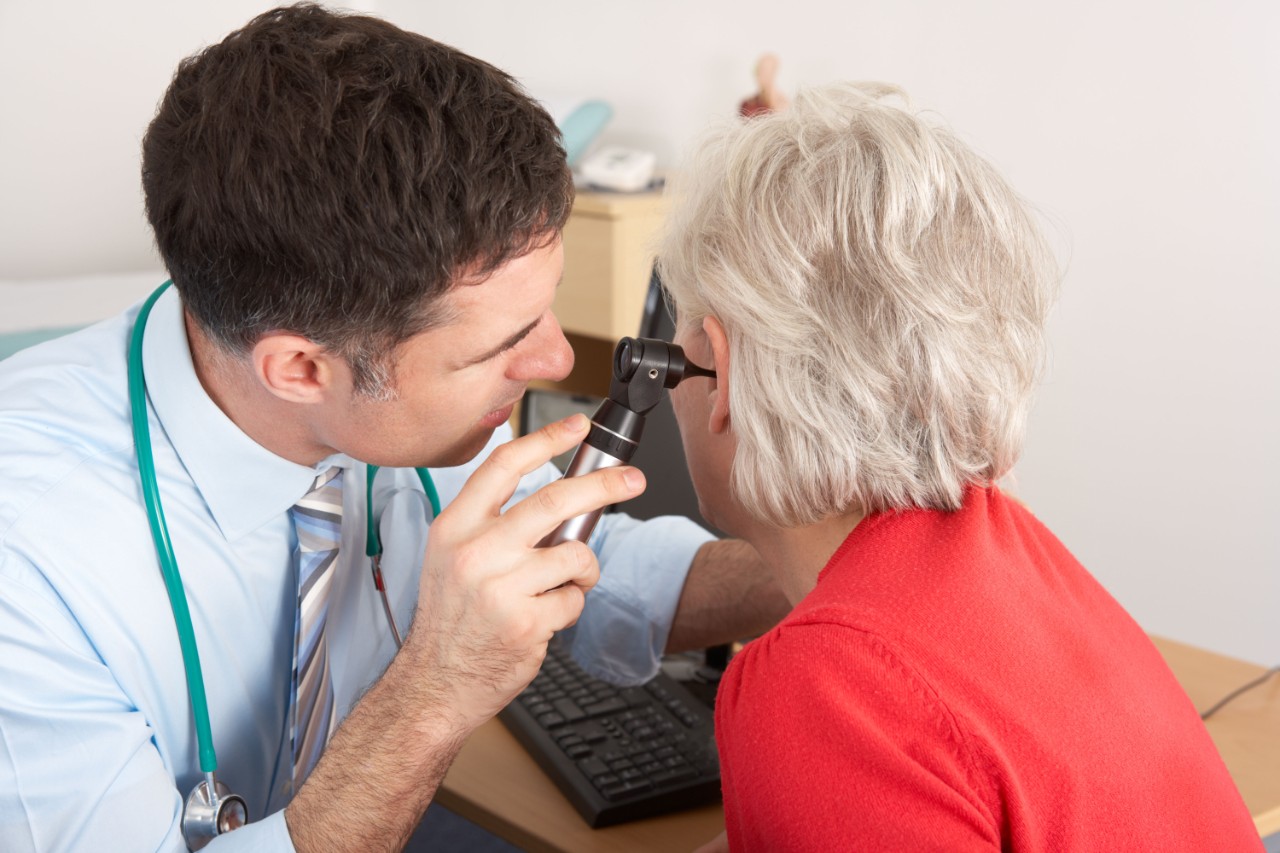
- Ear inspection. The provider uses an “otoscope” to look inside your ear for excessive earwax or any condition that might affect your hearing test results and possibly require referral to a physician.
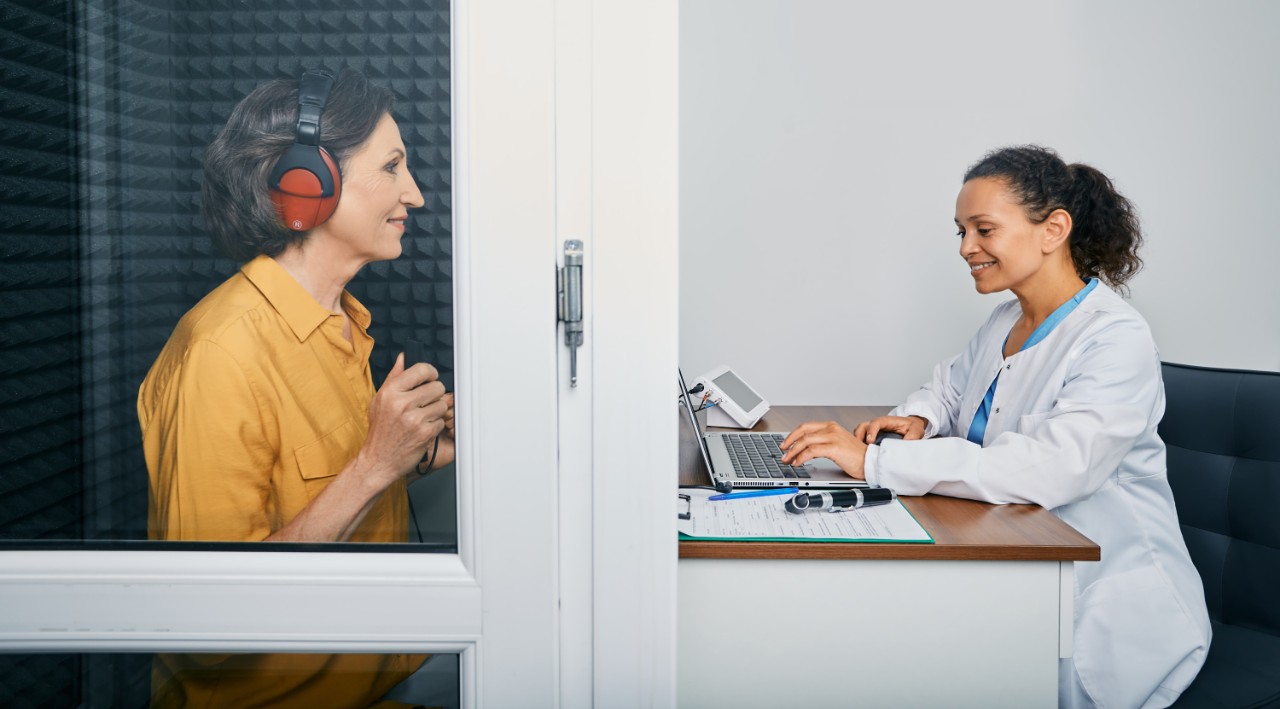
- Pure-tone testing. Through headphones, you listen for a series of tones, ranging from low to high frequencies. This type of auditory test reveals the faintest tone you can hear at each frequency; the results are charted on an audiogram.
- Speech testing. This type of hearing testing is used to confirm the pure-tone results. You’re presented and asked to repeat a series of words at various volume levels. Together, pure-tone testing and speech testing help your provider recommend the optimal hearing solution for you and to precisely program hearing aids to your needs.
- Post-testing consultation. The provider explains the test results and offers personalized recommendations for hearing loss. Remember, you’re under no obligation to purchase hearing aids.
Learn more about the different types of hearing tests and why they matter.

Address your hearing loss
The first step to better hearing begins with in-person hearing evaluation.