



Check your hearing online
The Importance of Testing Your Hearing
Understanding and addressing hearing issues can directly support your overall health and well-being. Here are five reasons to test your hearing regularly:
- Early Detection of Hearing Loss. Many people don’t realize they have hearing loss because it often happens gradually. A hearing test can help detect any loss early, allowing for quicker intervention.
- Improved Communication. Good hearing is essential for effective communication in daily life. Identifying and treating hearing loss can enhance your ability to interact with others at work, home, or social gatherings, leading to a higher quality of life.
- Prevent Cognitive Decline. Studies have shown a link between untreated hearing loss and cognitive decline, including dementia. Regular hearing tests can help identify hearing issues that, if untreated, may lead to a decline in brain function.
- Manage Tinnitus and Other Ear Conditions. Hearing tests can help diagnose conditions like tinnitus, which may be related to hearing loss. Early intervention may help manage these symptoms and prevent them from worsening.
- Protect Against Further Damage. Regular hearing check-ups can help you identify potential causes of hearing damage, such as exposure to loud environments, and encourage you to take preventative measures.
Online Hearing Test vs. Screening vs. Quiz
You’ll often hear these terms used when discussing hearing loss, especially hearing test vs. hearing screening. A screening is a standardized professional evaluation, while a comprehensive diagnostic test provides an in-depth view of your auditory system.
Meanwhile, a hearing quiz is an unvalidated, informal check. A quiz can be a great preliminary tool, designed to give you a quick snapshot. If that snapshot indicates hearing loss, it’s best to make an appointment with a licensed provider.
Attention AHHC Members: Try our new pure-tone screening tool directly on your personal device. Join one of 600,000+ people who’ve used this tool to find their Hearing Number.
Common Types of Hearing Tests for Adults
If your initial screening indicates a potential hearing issue, a professional hearing care provider will likely perform comprehensive tests to get a better understanding of your hearing health.
- Pure Tone Audiometry. During a pure tone audiometry test, you'll wear headphones in a soundproof booth and listen to a series of tones at various frequencies and volumes. The goal is to pinpoint the quietest sound you can hear at each frequency. The provider will chart your hearing test results on a graph, called an audiogram, a visual representation of your hearing loss. This helps specialists understand which frequencies you are missing and assists in diagnosing the cause of hearing loss.
- Speech Audiometry. While pure tone testing measures loudness and pitch, speech audiometry evaluates your ability to perceive, process, and understand spoken words. You will listen to and repeat words presented at different loudness levels, both in quiet and in the presence of background or competing noise. This test is especially important because many people with hearing loss struggle to understand what’s being said in noisy settings!
- Tympanometry Test. Unlike tests that require you to actively respond to sounds, a tympanometry test is completely objective. A soft probe is placed in the ear canal to gently change the air pressure and measure how well your eardrum moves. This helps providers identify physical issues in the middle ear, such as fluid buildup, ear infections, or a perforated eardrum as well as assessing eustachian tube function.
- Bone Conduction Testing. Bone conduction testing assesses hearing sensitivity by bypassing the outer and middle ear to test the inner ear’s response directly. A small device, a bone oscillator, is placed behind your ear, sending vibrations directly to your inner ear. This helps determine whether your hearing loss is sensorineural or conductive.
Preparing for an appointment? As an adult, here is what to expect during a hearing test. Below, we’ll look at the different hearing assessments for infants and toddlers.

Pediatric Hearing Assessments
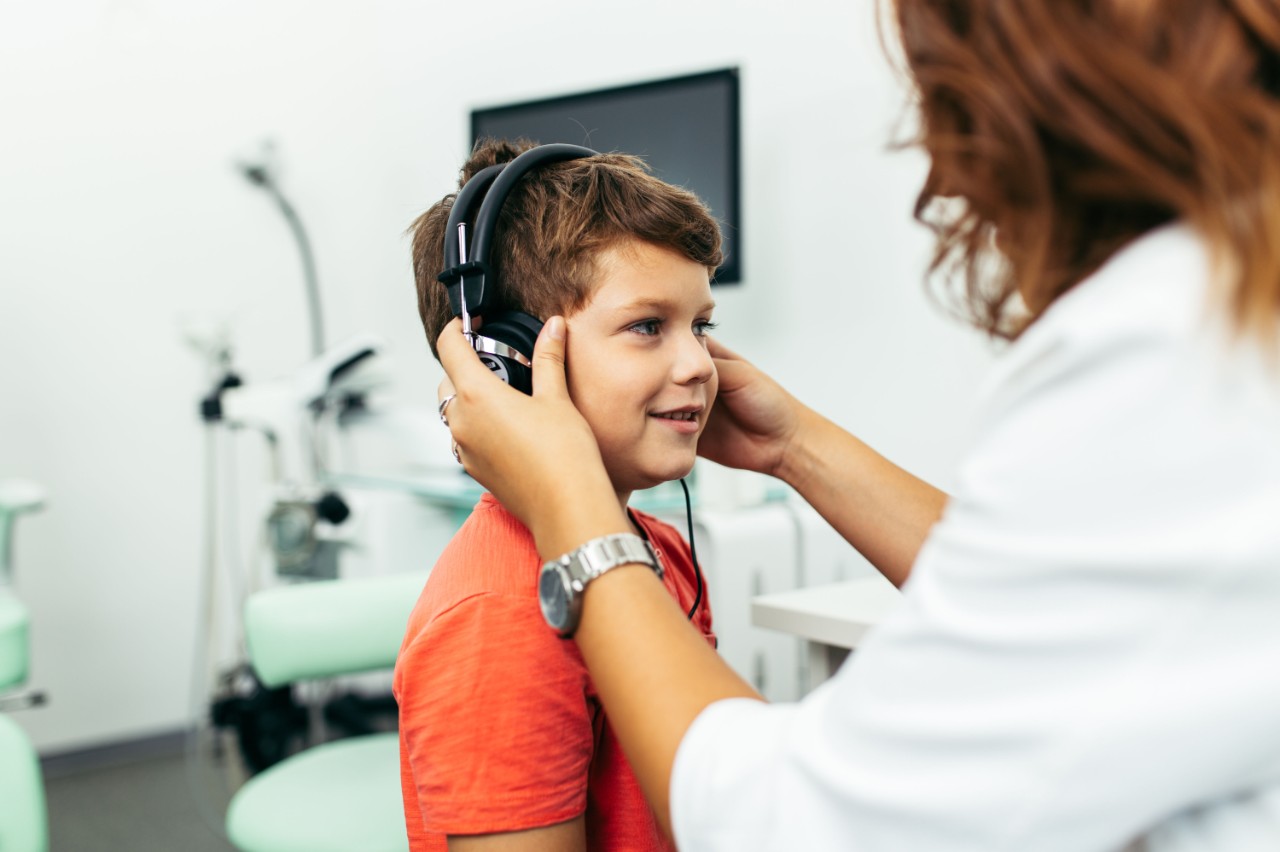
Types of Hearing Tests for Toddlers
Note that pediatric testing must be performed by an audiologist.
1. Auditory Brainstem Response (ABR)
The ABR test measures how your brain responds to sound. This specialized test is typically used when a more in-depth analysis is needed, such as for infants or individuals with neurological conditions.
During ABR testing, electrodes are placed on the head to record brainwave activity in response to sounds. The audiologist can evaluate the functionality of the auditory nerve and brain pathways that carry sound from the inner ear to the brain.
2. Conditioned Play Audiometry (CPA)
CPA turns hearing testing into a game, which helps keep toddlers engaged. This test is ideal for children around 2.5 years who can follow simple instructions.
During CPA, the child is trained to perform a task (like placing a block in a bucket) each time they hear a sound. This helps determine hearing thresholds for different frequencies and is especially useful for children who need more engaging activities to stay focused.
Types of Hearing Tests for Infants
Audiologists rely on objective physiological measures that don’t require the infant to respond verbally or physically. The most common types of hearing tests for infants include:
1. Otoacoustic Emissions (OAE) Testing
This test evaluates the function of the hair cells in the inner ear. Healthy hair cells produce low-level sounds, or otoacoustic emissions, in response to sound stimuli. In this test, a small probe is placed in the ear to deliver a series of sounds to measure the ear’s response.
If no emissions are detected, it might mean there’s hearing loss due to damaged hair cells. OAE testing is particularly useful for testing infants and those who may have difficulty participating in traditional hearing tests. This test is often done in the hospital after the infant is born.
2. Auditory Brainstem Response (ABR)
Our hearing aid quiz can help you figure out which hearing aid features work with your needs, lifestyle, and other factors unique to you!

The Next Step: Professional Evaluation
Whether you start with a quick online screening or schedule a comprehensive in-person evaluation, understanding the different types of hearing tests empowers you to take charge of your well-being.
As you age or are frequently exposed to loud sounds, regular hearing tests can benefit your overall health. If your quiz results indicate that you may have hearing loss, the next step is a professional hearing evaluation. This is the only way to accurately assess your hearing health and recommend the best course of action, including hearing aids.
Request an appointment today to get a clearer picture of your hearing health.

Take control of your hearing health
Request a hearing evaluation
Request an appointment at a hearing care provider near you.
We appreciate you reaching out to us.
Our hearing care advocates will call you shortly and help answer all your questions.


Good hearing matters


