



Hearing is an important part of everyday life, but when was the last time you stopped to think about the complex mechanics happening inside our heads? From the moment a dog barks or a favorite song plays, your ears are performing a high-speed conversion of physical vibrations into electrical signals that the brain can understand.
To understand how the ear works, we have to look at it as a three-part system. Each section of your ear anatomy, the outer, middle, and inner ear, plays a specific role in capturing, amplifying, and translating sound waves into signals your brain can interpret.

The Outer Ear: Collecting Sound
Understanding the Ear Canal (Auditory Canal)
The functions of the ear canal go beyond just being a passageway. It protects the delicate eardrum and boosts the volume of human speech frequencies.
- Deep Dive. To learn more about this pathway, explore what the auditory canal is.
- Common Issues. Blockages or infections can cause a swollen ear canal, temporarily muffling your hearing.
What is the function of earwax? We get this question a lot! Earwax is your ear’s natural defense system, trapping dust and repelling water to prevent infection.
The Middle Ear: Mechanical Amplification
When sound waves reach the end of the canal, they hit the tympanic membrane (the eardrum). This membrane vibrates in response to a sound, setting the middle ear into motion.
Functions of the Middle Ear:
The middle ear is an air-filled chamber containing the three smallest bones in your body. The names of these bones come from their shapes: the malleus (hammer), incus (anvil), and stapes (stirrup).1
These bones bridge the gap between the eardrum and the inner ear. The primary functions of the middle ear are to amplify sound vibrations so they are strong enough to travel through the fluid in the cochlea (inner ear.)
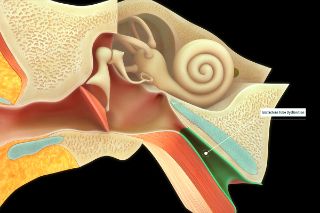
Pressure Regulation
The Eustachian tube is a small canal that connects the middle ear to the back of the nose/upper throat (nasopharynx) to equalize pressure.
If you’re experiencing a popping or crackling sound when you swallow or yawn, read our tips for managing Eustachian tube dysfunction.
In cases of chronic fluid buildup in the middle ear, specialists may recommend ear tubes to assist with drainage.

The Inner Ear: Signal Conversion
The inner ear is responsible for both hearing and your sense of balance.
How is Sound Processed in the Ear?
Inside the snail-shaped cochlea, fluid ripples in response to vibrations. As this fluid moves, 25,000 nerve endings are activated.1 These ripples move microscopic hair cells, which act as sensory receptors.
- Mechanical to Electrical. The hair cells convert fluid movement into electrical impulses.
- Transmission. These impulses travel via the eighth cranial nerve (auditory nerve) to the brain.
- Interpretation. Your brain decodes these signals into the sounds you recognize as music, speech, or noise.
Balance and Hearing: What’s the Connection?
The inner ear also houses the vestibular system, which helps regulate balance. Disorders here can lead to significant issues like Meniere’s Disease, which affects both hearing and equilibrium.
Understanding Hearing Disorders
Even when your ear anatomy is physically intact, the way sound is processed can vary. Disruptions in the journey from the ear canal to the brain can result in unique auditory experiences:
- Auditory Processing Disorder. You can hear the sounds around you, but the brain has trouble interpreting what they are.
- Autophony. A phenomenon where you hear your own voice or internal sounds (such as your own heartbeat) and perceive them as unnaturally amplified.
Understanding how the ear works is the first step toward protecting your hearing. Whether you are dealing with a temporary blockage or more complex inner ear concerns, the experts at Amplifon are here to help you navigate your journey to better hearing.
Unsure if you have hearing care coverage? Use our Benefit Checker Tool to see if your insurance covers the help you need!

Understand Your Hearing Insurance Coverage
Understanding how the ear works is the first step toward protecting your hearing. Whether you are dealing with a temporary blockage or more complex inner ear concerns, the experts at Amplifon are here to help you navigate your journey to better hearing.
Unsure if you have hearing care coverage? Use our Benefit Checker Tool to see if your insurance covers the help you need!
Sources
- Johns Hopkins Medicine. “How the Ear Works.”

Take control of your hearing health
Request a hearing evaluation
Request an appointment at a hearing care provider near you.
We appreciate you reaching out to us.
Our hearing care advocates will call you shortly and help answer all your questions.


Good hearing matters


